
3D and augmented reality
AI-generated 3D product models, from the photos you already have
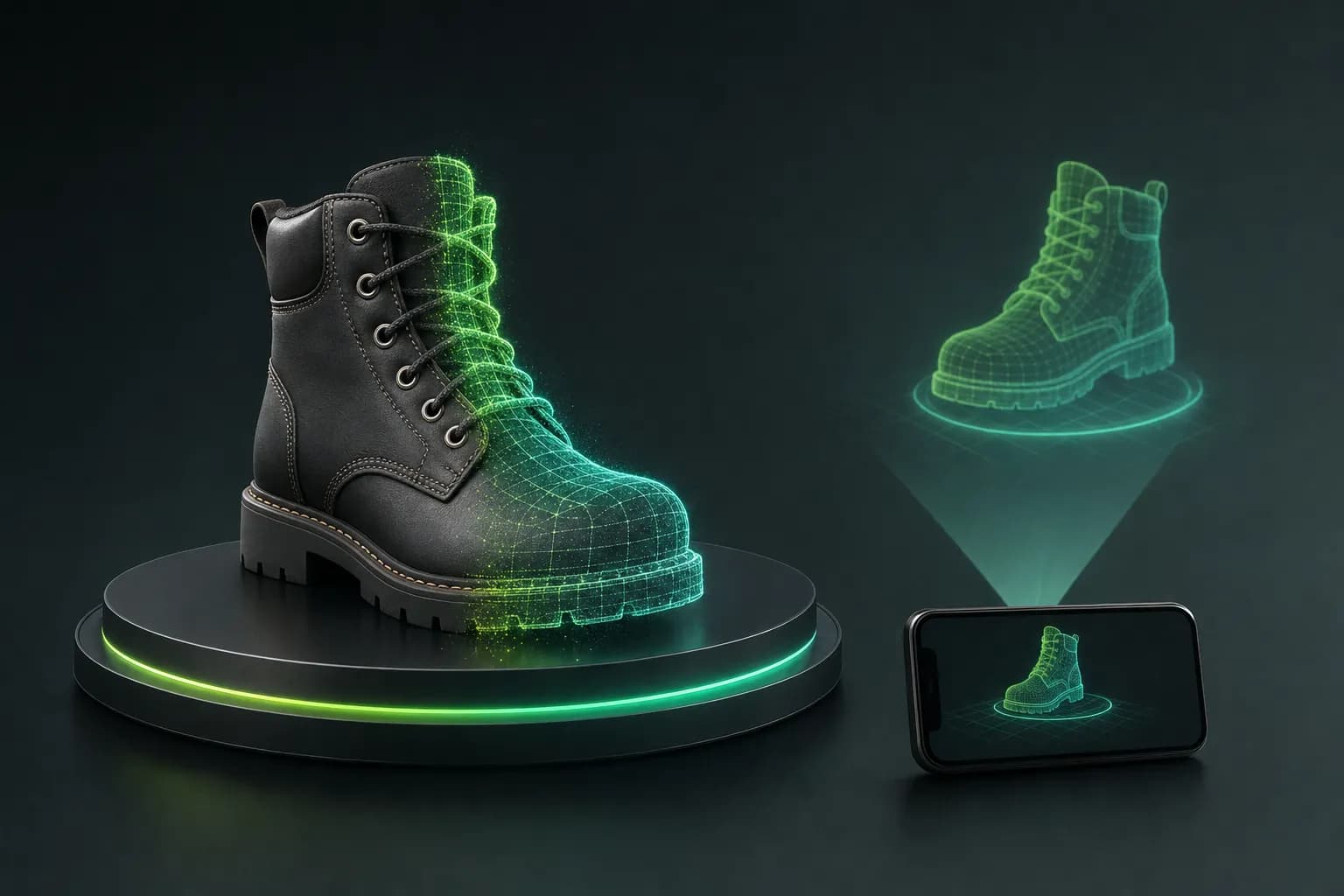
3D-scanning a product used to require a studio and expensive equipment. Today the model can be generated from catalog photos, with AI, straight from the website panel. Customers spin the product on screen and, on a phone, see it at real size through the camera.
- studio photos are enough to generate the model
- 4
- studio photos are enough to generate the model
- from photo to finished model in the panel
- Minutes
- from photo to finished model in the panel
- of infrastructure per generated model
- Cents
- of infrastructure per generated model
- at real size on Android and iPhone
- AR
- at real size on Android and iPhone
How 3D generation from photos works
The team uploads the product photos already used on the website: the 45-degree shot (required) and, if available, profile, inside and back. They enter the product's real size and click generate. An AI 3D reconstruction model builds shape and texture, the system scales it to real size and saves the model to the product record.
The model comes in two formats: GLB, used on the web and Android, and USDZ, which iPhones use to open augmented reality. It is born switched off: someone reviews the preview and only then turns on the toggle that shows the View in 3D button on the product page.
In production at Safetline
Safetline, a safety footwear manufacturer, has 3D generation inside its own website panel. The first proof, with the Miura boot, was presented to the Safetline team and approved; the feature then became self-service for marketing to generate product models.
Behind the scenes, the panel creates a GPU machine on Google Cloud only during generation; after a few idle minutes, the machine shuts itself down. No expensive server sits waiting, and each model costs cents in infrastructure.
What a 3D product viewer is good for
Fewer doubts in technical purchases
buyers see stitching, sole and finish from every angle.
Augmented reality
on a phone, the product appears on the floor or table at real size.
A standout catalog
at trade shows, sales presentations or in the sales rep portal.
Fewer photo shoots
one model yields new angles and images without a new studio session.
Richer pages for search
interactive content that increases time on page.
Which products work well
AI reconstruction works best with solid, well-defined objects: footwear, equipment, parts, packaging, furniture, electronics and accessories. Transparent, very shiny or very thin objects (such as wires and meshes) need special photos or manual modeling.
Photo quality drives the result. A white or cut-out background, the whole product in frame and good lighting produce better models. In the proof stage, we test with your products before defining the process.
Integrated with your website or catalog
The 3D viewer loads only when the visitor clicks, so it does not weigh down the page for those who do not use it. It works on websites built by OnWeb and can be integrated into existing catalogs, stores and portals. See website development and AI for business.
What you get
A proof with your products
models generated from your photos before scaling.
Generator in the panel
the team generates and publishes new models on its own.
Viewer on the website
a View in 3D button on product pages, with AR on phones.
On-demand infrastructure
a GPU that starts to generate and shuts itself down.
Photo guide
how to shoot for the best result.
Scale and texture adjustments
models at the product's real size.
How we implement
- 01
Product selection
three to five representative catalog items.
- 02
Proof
models generated and presented for approval.
- 03
Integration
generator in the panel and viewer on product pages.
- 04
Training
the team learns to shoot, generate and publish.
- 05
Scale
the catalog gains models at the company's pace.
Built by OnWeb

Frequently asked questions
Do I need a 3D scanner?
No. The model is generated by AI from regular studio photos of the product, like those already on the website.
How much does generating a 3D product model cost?
Infrastructure costs cents per model, because the GPU machine only exists during generation. The main investment is setting up the generator and the viewer.
Does 3D work on iPhone?
Yes. The system also generates the USDZ file, which iPhones use to open the product in augmented reality.
Does the 3D model slow the website down?
No. The viewer only loads when the visitor clicks View in 3D.
Related services
Shall we turn your business on?
Tell us what you need. We reply with a diagnosis of the technical path, timeline and investment, with no strings attached.