Web and mobile apps
App development for businesses, from MVP to a platform in production
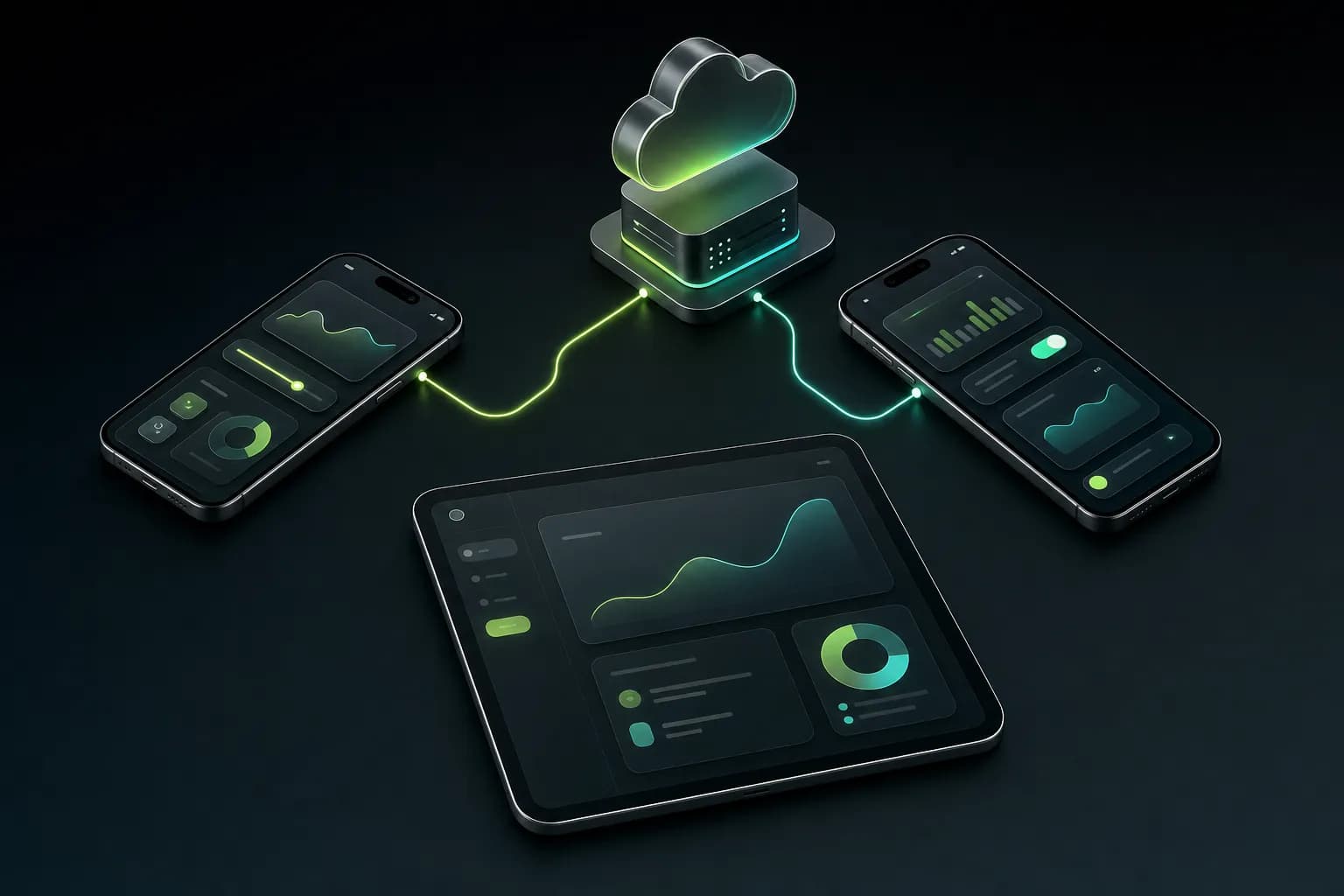
An app only works if what is behind it works: login, database, integrations, notifications and AI. OnWeb builds the app and the whole structure that supports it, on Google Cloud, for customers, field teams and partners.
- languages in the Crownler app
- 4
- languages in the Crownler app
- companies using App Netlinks
- ~50
- companies using App Netlinks
- installs on the home screen without an app store
- PWA
- installs on the home screen without an app store
- backend on Google Cloud
- 100%
- backend on Google Cloud
What kind of app does your company need
Before talking technology, the question is who will use it and where. The answer defines the format:
Web app (SaaS)
runs in the browser on any device, with no install. Ideal for B2B platforms, like Crownler.
PWA
a web app that installs on the phone's home screen, works on poor connections and sends notifications, without an app store.
Native or hybrid app
published on the App Store and Google Play, when heavy use of camera, GPS or device features is needed.
Internal app
a tool for field, sales or operations teams, connected to company systems.
Customer portal
a logged-in area where customers follow orders, invoices and support.
What is behind a well-built app
The screen is the smallest part of the work. A business app needs:
- Backend and database: its own API, PostgreSQL and business rules on the server, not on the phone.
- Login and permissions: accounts per company and per person with different roles, as in App Netlinks, where each client has its own space.
- Integrations: payments, ERP, CRM, WhatsApp and email. See systems integration.
- Automated routines: jobs that run every day on their own, such as reports, alerts and syncs.
- Built-in AI: document reading, recommendations, assistant and content generation inside the app.
- Observability: logs, error alerts and metrics to know what happens in production.
From MVP to product
The safest way to build an app is to start small and use it for real. The MVP solves the main task for a real group of users; the rest comes in phases, based on what people actually use.
That is how Crownler happened: the first module went live in weeks, and today the product has 16 tools, plans, paid modules, four languages, white label and an API. Each phase went to production before the next began.
How much it costs to build an app
The cost of building an app depends on the format (web, PWA or app store), the number of roles and screens, the integrations and the AI involved. A web MVP focused on one task is a project of a few weeks; a multi-module platform is built in phases.
After launch there are infrastructure costs (usually low on Google Cloud, which charges by usage), app store costs when applicable and evolution. OnWeb shows those numbers from the start.
What you get
Discovery and prototype
user journey and key screens validated before code.
App and backend
app, API, database and admin panel.
Secure login
Google Identity Platform, with accounts per company and role-based permissions.
Publishing
domain, app stores when needed and monitoring.
Your code
repository and infrastructure in the company's name.
Evolution
new features by phase, with the app always live.
How we build your app
- 01
Problem and user
who uses it, for what, when and on which device.
- 02
MVP scope
the smallest version that already delivers real value.
- 03
Design and build
weekly cycles with a test version available to the team.
- 04
Controlled launch
first a group of users, then everyone.
- 05
Growth
usage metrics guiding the next features.
Built by OnWeb
SaaS · SEO and GEO
Crownler
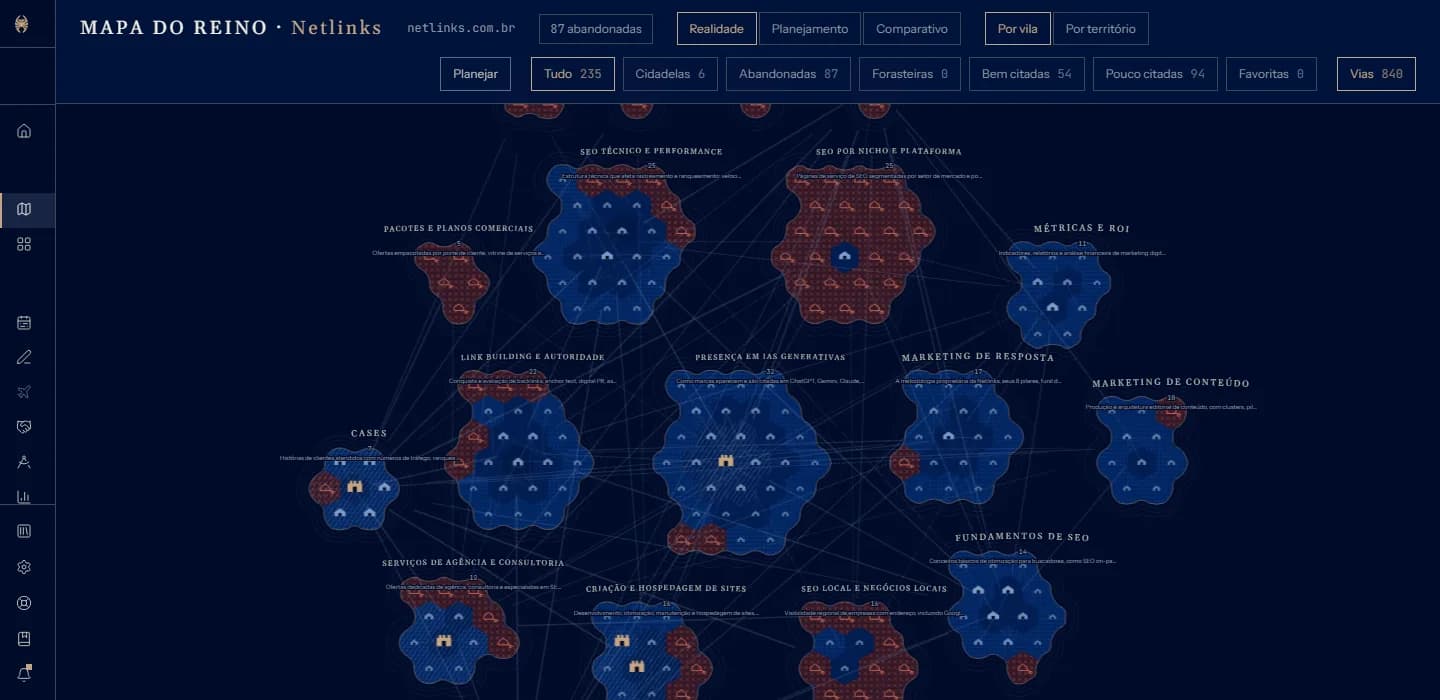
An SEO and GEO SaaS in four languages: it reads the whole site and draws it as a map, tracks Google and AI answers, produces content and talks to AI agents via API and MCP.
Read the case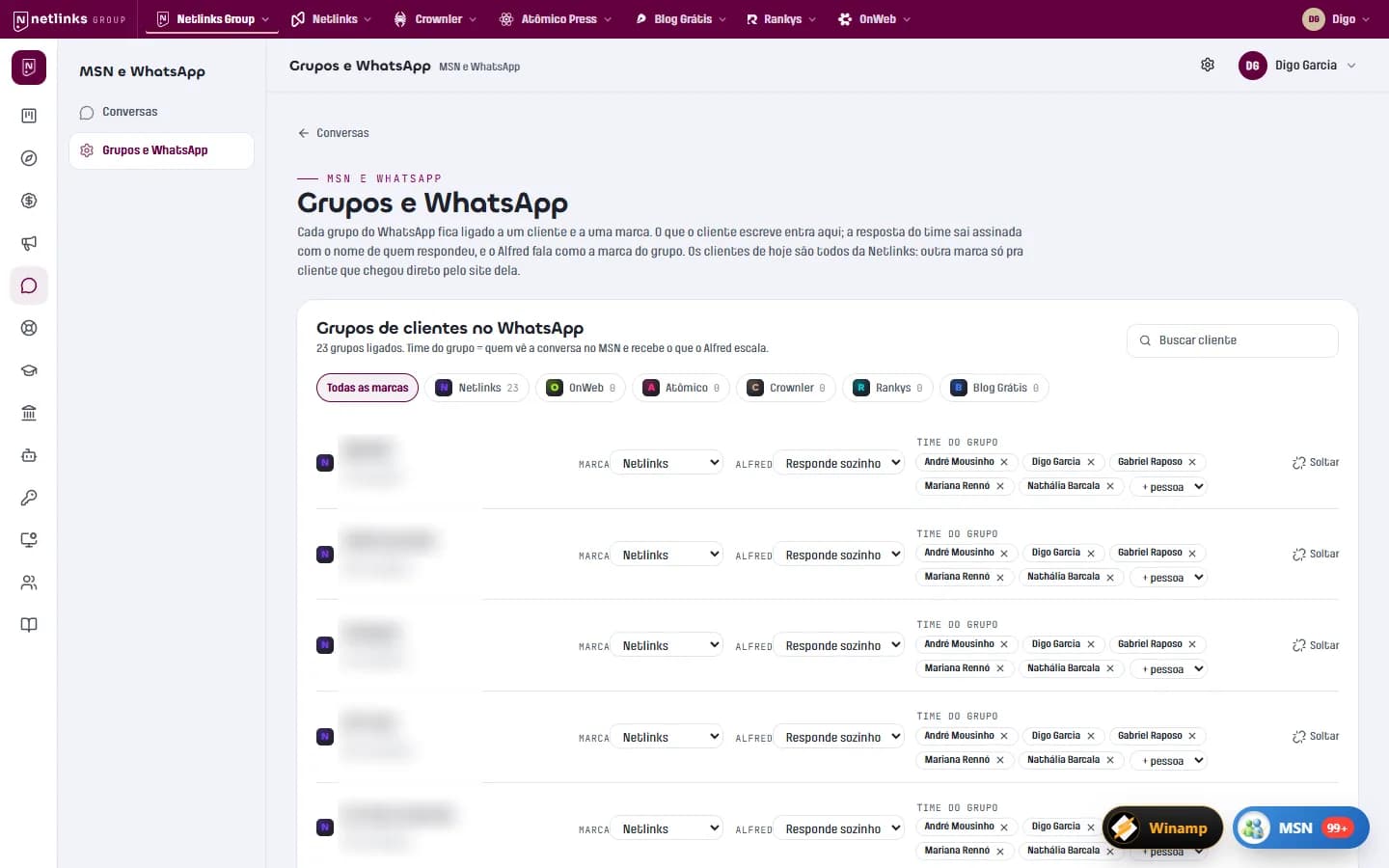
Internal platform · AI-powered operations
App Netlinks and Netlinks Group
The platform that runs the Netlinks Group: an MSN-style inbox integrated with clients' WhatsApp groups, Alfred answering as customer success, and finance that issues invoices and reads the bank balance on its own.
Read the case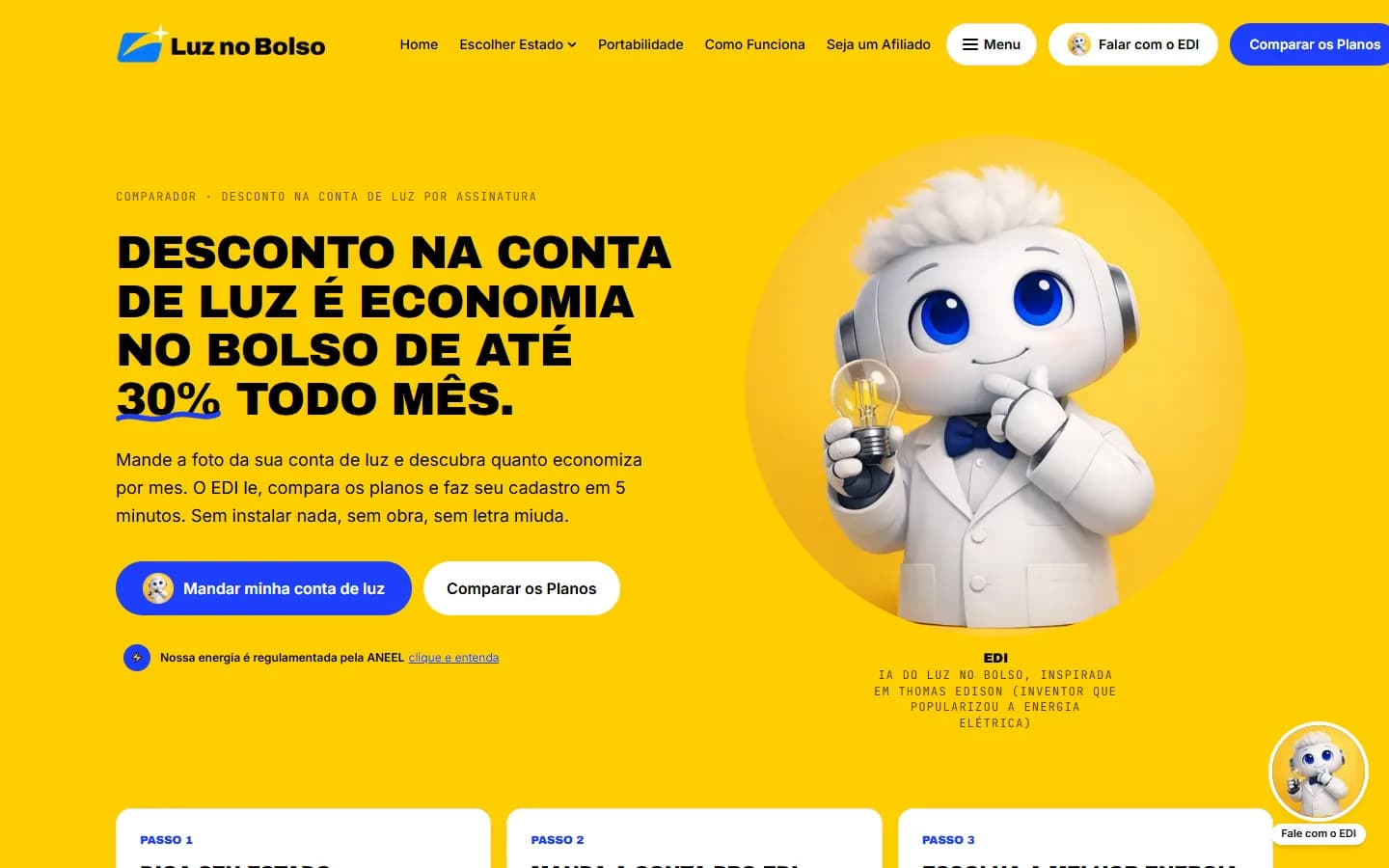
Energy · Community solar comparison
Luz no Bolso
A community solar comparison platform with 75 companies in 26 Brazilian states and EDI, an AI that reads a photo of the electricity bill, compares local providers and completes sign-up in the chat.
Read the caseFrequently asked questions
Is a native app or a web app better?
For most business apps, a web app or PWA works better: one codebase, instant updates and no store fees. Native makes sense when device features are used heavily.
How long does it take to build an app?
An MVP usually goes into use in a few weeks. Larger platforms grow in phases, each in production.
Can the app have artificial intelligence?
Yes. Every OnWeb app can have built-in AI: assistant, document reading, recommendations and automation. See AI for business.
Do you publish on the App Store and Google Play?
Yes, when the project calls for a store app. We handle accounts, each store's rules and updates.
Related services
Shall we turn your business on?
Tell us what you need. We reply with a diagnosis of the technical path, timeline and investment, with no strings attached.